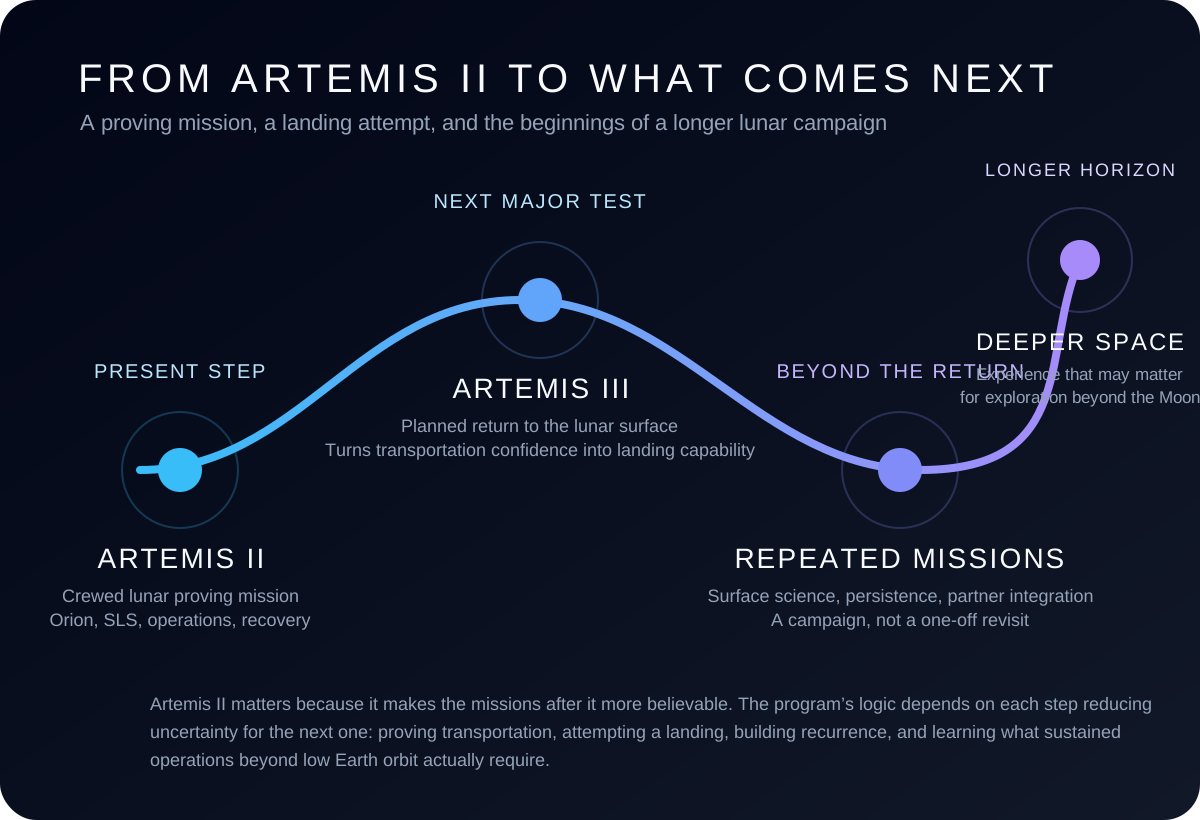
One of the defining ideas behind Artemis is that the Moon is not only a place to go, but also a place to learn. It is close enough to be operationally reachable and distant enough to force spacecraft, crews, and planners to confront many of the realities of deep-space exploration. Communications delays, mission duration, life-support reliability, navigation at scale, surface operations, and international coordination all become more demanding once missions move beyond low Earth orbit.
That is why the future of Artemis is often described in two voices at once. One voice is lunar: return to the surface, conduct science, and establish a more durable human presence. The other is preparatory: use the Moon and cislunar space to develop habits, systems, and infrastructure that may matter for later exploration farther into the solar system. Whether every part of that broader vision is realized is still an open question, but the program’s current logic depends on that dual purpose.