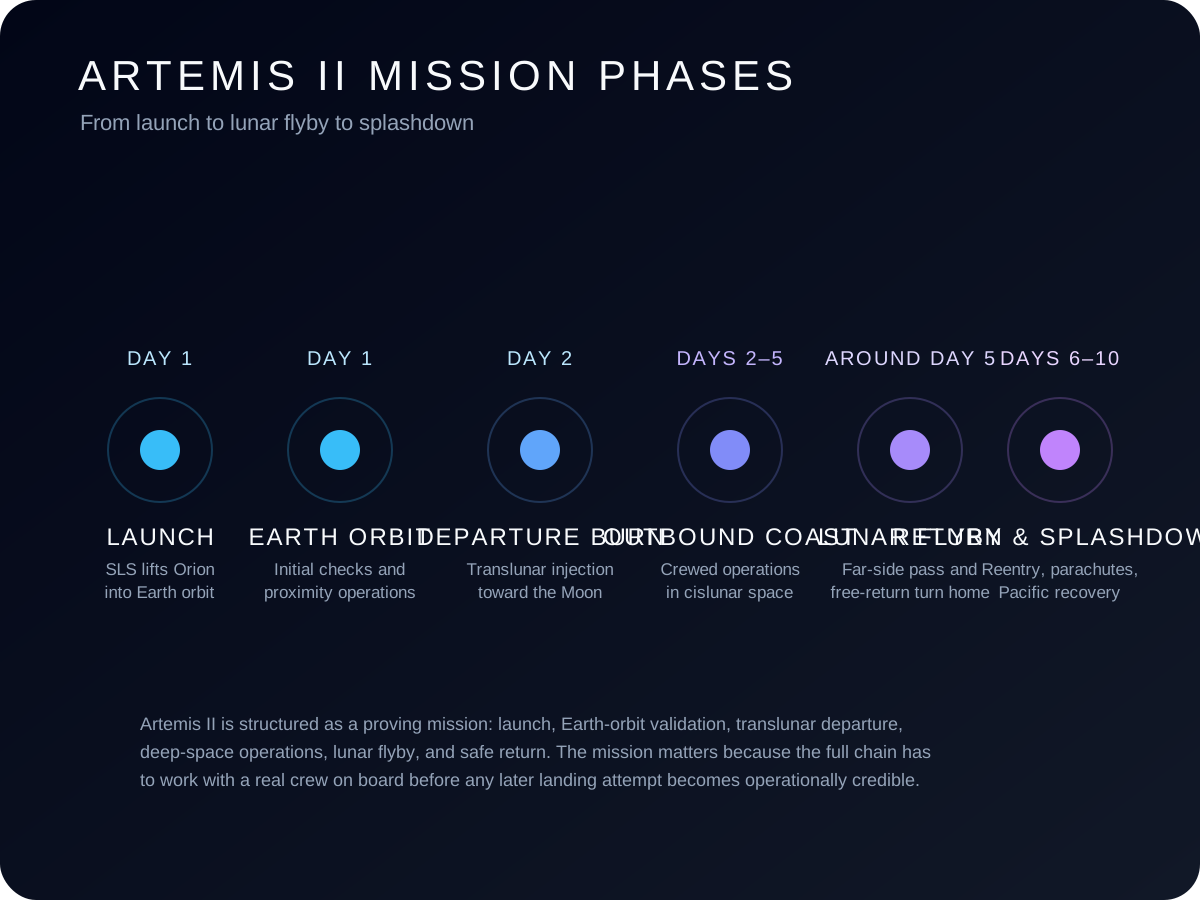
In public imagination, lunar missions are often judged by whether astronauts walk on the surface. By that standard, Artemis II might be misunderstood as an intermediate step rather than a defining mission in its own right. But a landing architecture without a reliable crewed transportation system is not an architecture at all; it is an aspiration. Artemis II exists to reduce uncertainty, sharpen operational understanding, and let a real crew test the systems that later missions will trust with even more demanding objectives.
This is where the comparison with Apollo becomes useful, especially with Apollo 8. The earlier mission was remembered partly because it was dramatic and timely, but also because it demonstrated that the path to a landing could be made real. Artemis II plays a similar role for its own era, though in a different political and technological context. It is the flight that asks whether Orion, SLS, mission control, recovery teams, and the wider Artemis program can function together as a human lunar system rather than as separate pieces of promise.
If Artemis II succeeds, its legacy will not be limited to photographs, headlines, or even the historical firsts represented by its crew. Its deeper achievement will be to convert a program of plans into a program of demonstrated human capability. That is why the mission deserves more than a quick summary. It is the disciplined center of the early Artemis story, the point at which ambition has to survive contact with reality and prove it can carry people safely through deep space.